The quick answer
A good new dental patient experience is built around the person, not the procedure. In Dr. Michael Sonick's practice, the phone is answered within two rings, every new patient is greeted by name, the doctor tells them the truth about their options, and each patient gets a personal letter within 48 hours. His view is that being present with the patient costs a practice nothing.
A new patient sits down in an unfamiliar chair. They do not know whether the doctor is the best in town. They do know how the visit makes them feel.
Dr. Sonick has run his own practice since 1985, and he builds the new dental patient experience around that feeling. In his words: "Our mission statement is very simple, to improve the quality of our patients' lives."
Why the first visit is not a sales visit
"The big difference is my practice is not transactional," Dr. Sonick says. He describes a starting point he sees in many offices: "Most doctors walk in, they go, what can I do? What procedure can I do?"
His own job description is simpler: "My job is to get my patients healthy and keep them healthy."
That means every patient gets the same exam and the same honest diagnosis, whatever they can afford. As he puts it: "Whether you come in on a bus or a limousine, I'm gonna give you an exam and give you a diagnosis."
Sometimes it means advising against treatment. He tells the story of a man in his fifties who asked to have all his teeth taken out. Dr. Sonick said no, and explained why. "Sometimes I have to save the patient from themself."
Step 1: A person answers the phone
The new patient experience starts before anyone walks in. "The phone is answered within 2 rings," Dr. Sonick says, and it is answered by a person.
There is no phone script. As he puts it, "we just hire nice people." New patients also cannot book themselves online: "We don't let them make it on their website, because we want to have that relationship with them."
For more on turning that first call into a booked visit, see our article on new patient calls that become appointments, and Danielle Kramer's approach to the hardest question on that call, what to say when a caller asks "do you take my insurance?".
Step 2: Greet them by name
"They're greeted by name when they walk in." It sounds small. For a nervous patient walking into a new office, it tells them they were expected.
Step 3: Tell them the truth
Patients often expect the doctor to be an all-knowing wizard. Dr. Sonick describes himself as "just the guy behind the curtain", and he is plain about what honesty does for a practice:
If you're honest and open with patients, it's actually a sales strategy. Tell them the truth.
Step 4: Follow up with a letter
"I write every patient in my practice a letter." It goes out within 48 hours and sets out the pros and cons of each option, so the patient can think it through at home with the facts in front of them.
He knows how rare that is: "Nobody else is getting a letter from their doctor."
The full first hour in his practice has six steps, including what happens in the first 90 seconds in the room and what he hands every new patient before they leave. Members get all six on one page, with a checklist for the Monday team huddle.
What slowing down really costs
Years ago, a consultant told him he needed to slow down and be present with his patients. He took it to heart, and he now sees that time as an investment, not a loss:
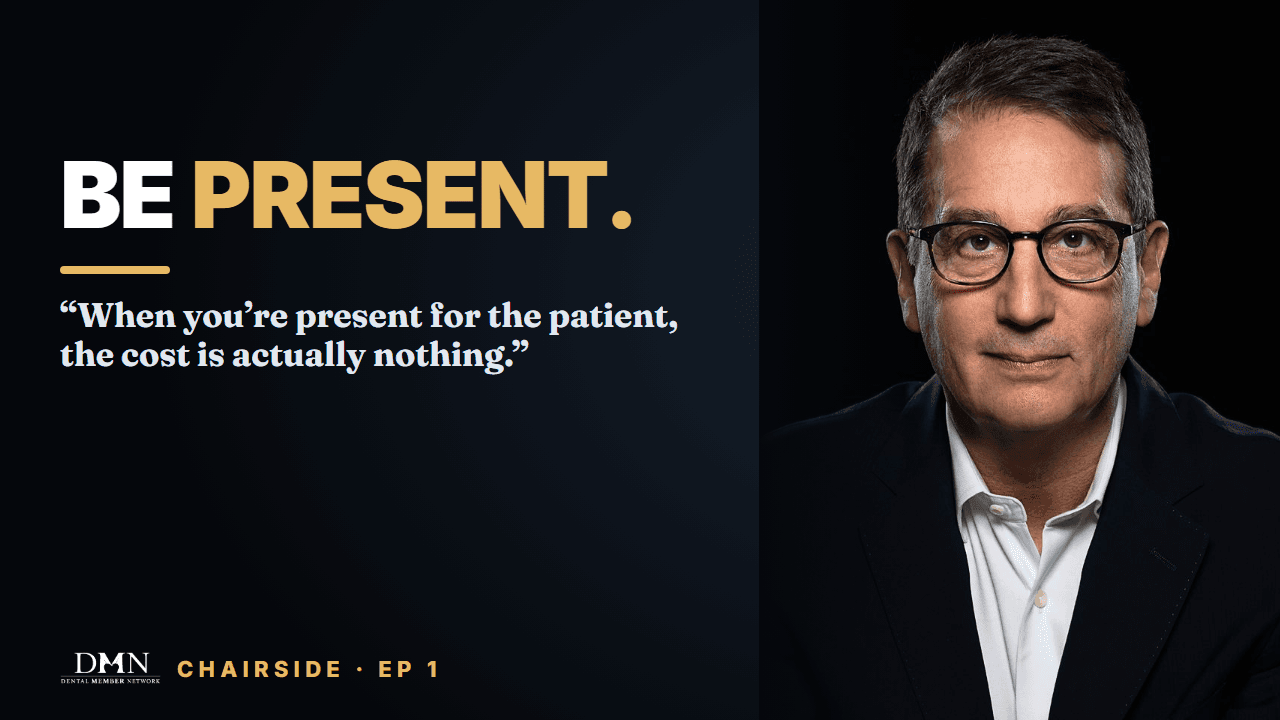
When you're present for the patient, the cost is actually nothing.
The team behind the experience
The first hour depends on the people delivering it. Dr. Sonick holds himself to a simple standard with his own team:
Every day I go to the office, I act like I gotta rehire everybody again.
Frequently asked questions
What makes a good new dental patient experience?
In Dr. Sonick's practice it is a set of small, consistent steps: a person answers within two rings, the patient is greeted by name, the doctor gives an honest diagnosis, and a personal letter follows within 48 hours. The common thread is that the visit is about the patient, not the procedure.
Should new dental patients be able to book online?
Not in Dr. Sonick's practice. New patients speak to a person, "because we want to have that relationship with them." Each practice has to decide what fits its own patients, but his reasoning is that the first relationship starts on that call.
Does slowing down with patients cost the practice money?
Dr. Sonick's answer is no: "When you're present for the patient, the cost is actually nothing." He also sees honesty as good business: "If you're honest and open with patients, it's actually a sales strategy."
Where should a practice start?
Pick one day. If changing everything at once is too much, Dr. Sonick's advice is to be present on one day of the week to begin with: "just do it on Wednesdays."

About the expert
Dr. Michael Sonick, DMD
Periodontist, Fairfield, Connecticut
Dr. Michael Sonick is a periodontist who has run his own practice in Fairfield, Connecticut since 1985. He has taught at NYU since 1984 and has written seven books, including one on hospitality, Treating People, Not Patients. He was the first guest on Chairside, the podcast from the Dental Member Network.
The takeaway
Be present. Just be present.
Build the new patient's first hour around the person in the chair: answer quickly, greet them by name, tell them the truth, follow up in writing, and keep a team you would hire again. Start with one day a week.
Patient Experience
Treating people, not patients
Dr. Michael Sonick, DMD
Periodontist, Fairfield, Connecticut
Continue inside the membership
Treating people, not patients
Members get the full one-hour episode with Dr. Michael Sonick, the Monday page with all six steps of his first hour and a team huddle checklist, and his Practice Playbooks.
Watch the 20-minute episode free. Members get the full hour, the Monday page with all six steps of the first hour, and Dr. Sonick's Practice Playbooks.
Join Dental Member Network