The quick answer
Dental block scheduling means reserving parts of the day for defined appointment types instead of filling every opening in the order patients call. Start with a realistic daily production goal, plan treatment blocks around your team's capacity, leave room for emergencies, and give one scheduling coordinator responsibility for keeping the plan useful.
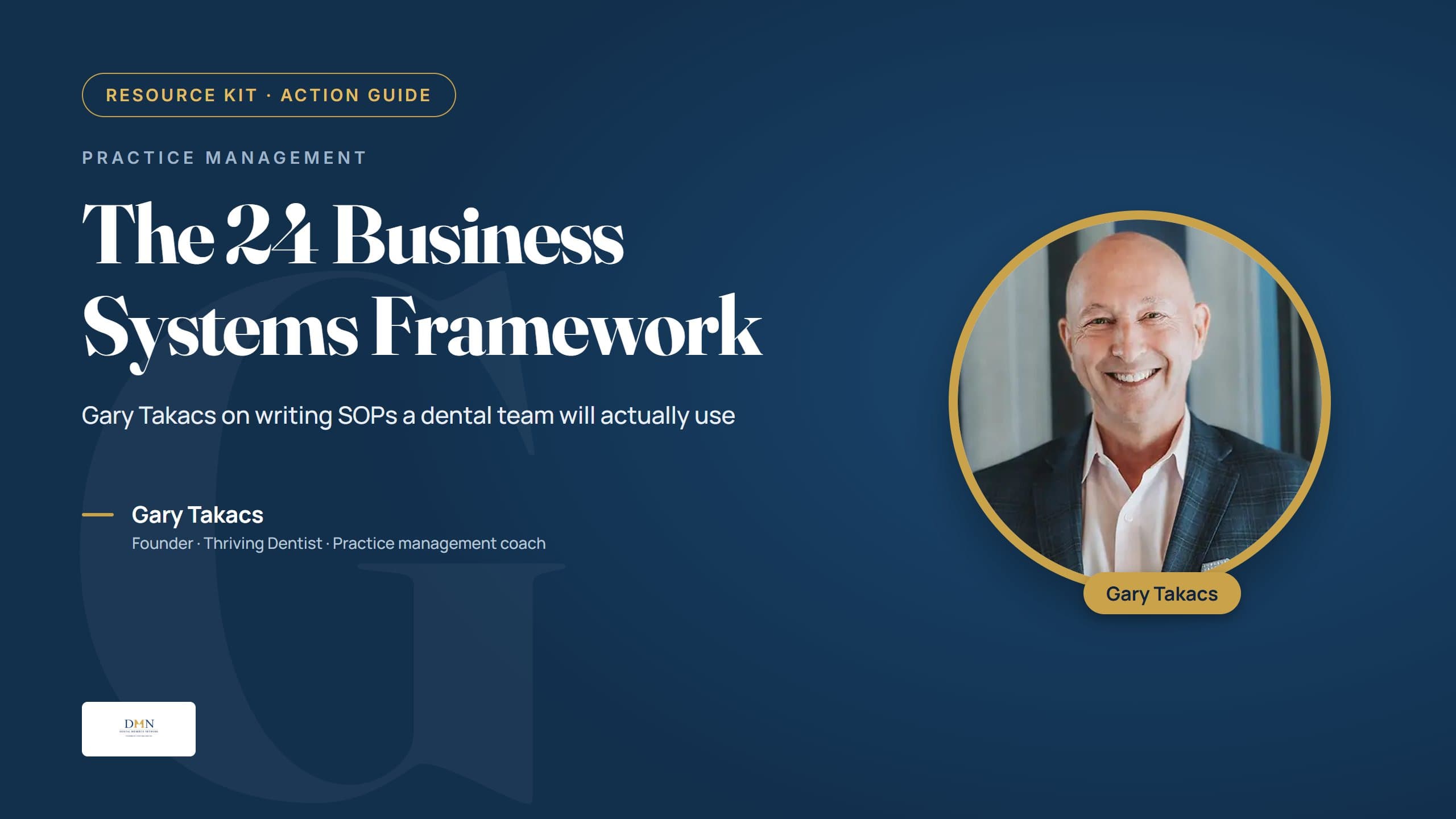
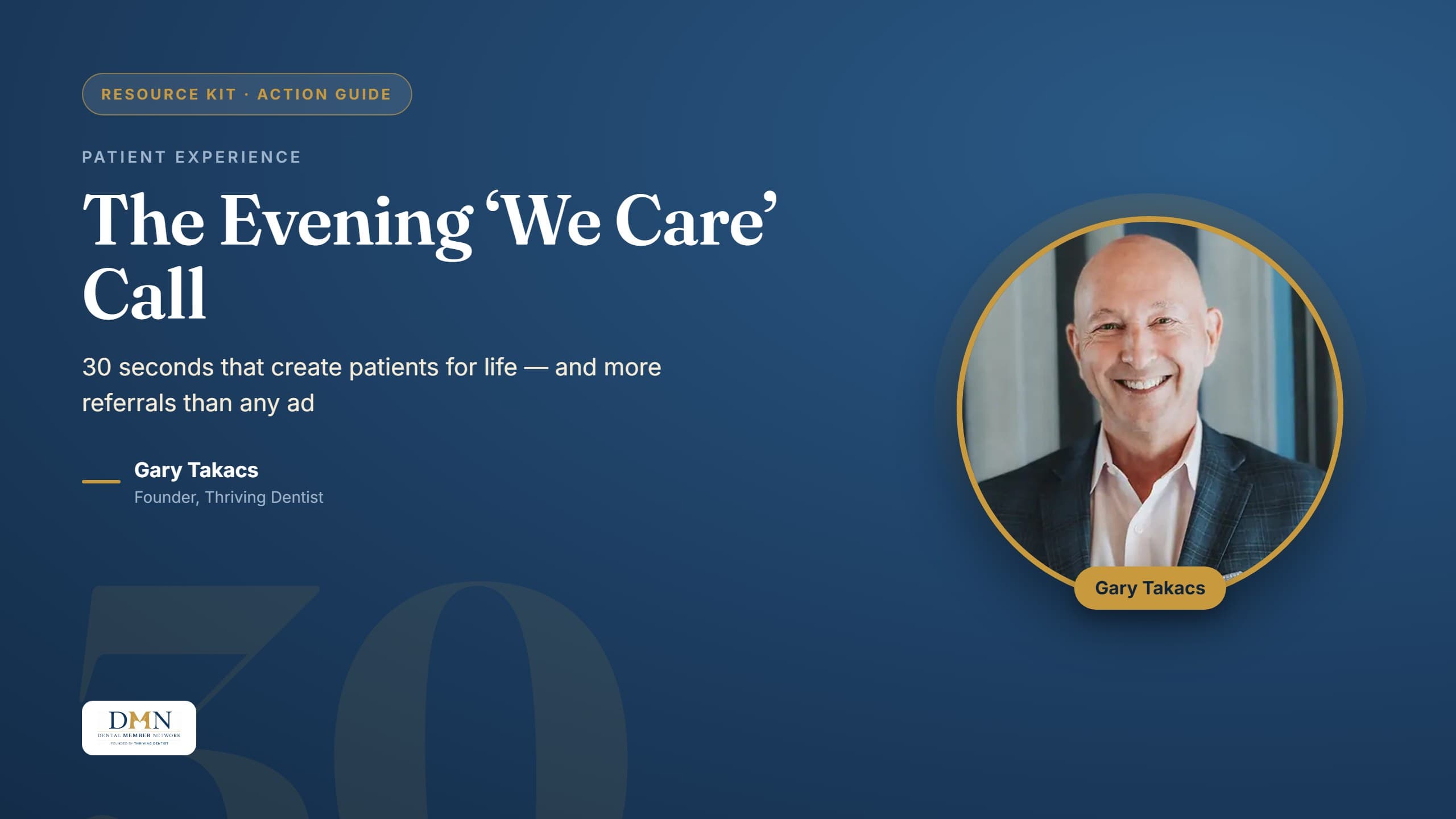
Expert guidance from Gary Takacs, based on the DMN Practice Playbook, Scheduling for Profitability.
The purpose is not to push more treatment into less time. It is to make the day more deliberate without losing sight of patient needs.
Why a full schedule can still feel unmanageable
Imagine a day with no obvious gaps. Several appointments need the dentist at the same time, an emergency has nowhere to go, and a longer procedure has been squeezed into whatever space remained.
The calendar looks busy. The team still has to solve the day as it happens.
Gary's Scheduling for Profitability Playbook starts with a different question: what should this day be designed to deliver? That includes a production target, a planned mix of appointments and someone who owns the schedule.
If your main problem is empty hygiene time, our guide to filling open hygiene appointments focuses on that specific gap. Block scheduling looks at how the whole day fits together.
Start with a target the team understands
Gary's starting calculation is simple: divide the annual production goal by the number of working days to establish a daily target.
Use that number as a planning reference, not a reason to recommend unnecessary care or shorten appointments below what the clinician needs. A schedule still has to fit the actual team, treatment rooms and care being provided.
Ask the scheduling coordinator to explain tomorrow's plan. Does the booked work fit the intended day? Where is the plan vulnerable? What needs the dentist's decision?
A number on a dashboard is not much help if nobody knows what to do with it.
Give appointment types a deliberate place
Gary's Playbook illustrates a day with higher-production procedures in the morning, shorter appointments and emergency capacity around midday, and follow-ups later.
Treat that as a starting pattern, not a universal timetable. The right arrangement depends on your clinician's working preferences, your staffing and the appointment lengths your practice actually needs.
For each block, agree on:
- Which appointment types belong there.
- How much time the team needs.
- Who can approve a change when the planned appointment does not fit.
These are practical planning prompts for applying the framework. They are not a rigid template that every practice must follow.
Plan for emergencies before one arrives
An emergency should not force the front desk to invent a solution with a patient waiting on the phone.
Gary recommends protecting emergency capacity and using a short-call list when that capacity can be released. Your practice should decide when unused time may be offered to another patient and who makes that decision.
Clinical urgency belongs with the clinical team. A reserved slot is a scheduling tool, not a substitute for triage.
At the dental morning huddle, identify the day's pressure points and confirm where the team can respond if the plan changes.
Give one person ownership, with support
Gary gives the scheduling coordinator responsibility for the daily target, short-call list, cancellations and pre-appointments.
Ownership does not mean doing everything alone. It means the team knows who is checking the plan and where an unresolved scheduling question goes.
For example, if a longer procedure cannot fit into the available block, the coordinator should have a clear route to the dentist. If a cancellation creates an opening, someone needs time to work the short-call list.
An owner without time or decision support is only a name beside a task.
Review the design, not just the empty spaces
Start by testing a manageable version of the template. At the end of the day, ask:
- Which appointments fitted the time reserved?
- Where did the team need to override the plan?
- Did emergency capacity help?
- What should change before the next similar day?
This review is an editorial application of Gary's approach. It turns the schedule into a process the team can improve, rather than a pattern it must defend even when it is not working.
Frequently asked questions
What is dental block scheduling?
It is a way of reserving time for specific appointment types so the day is built intentionally around care needs, team capacity and practice goals.
Does every dental practice need the same block template?
No. Gary provides a starting pattern, but appointment lengths, provider availability, emergency demand and staffing should shape the practice's own version.
Who should manage a dental block schedule?
A named scheduling coordinator should own the process, with clear support from the dentist and the rest of the team when a decision or exception is needed.
The takeaway
Design the day, then improve it.
Set a daily target the team understands, give each appointment type a deliberate place, protect emergency capacity, and make one coordinator responsible with support. Review what fitted at the end of the day and adjust before the next one.
Practice Management
Scheduling for Profitability

Gary Takacs
Founder, Thriving Dentist
Continue inside the membership
Get the complete Scheduling for Profitability Practice Playbook.
Available inside Dental Member Network. Its implementation worksheet gives your team a place to record the daily target, block schedule, emergency capacity, confirmation sequence and scheduling owner.
Gary's invitation includes three months free with code GARY.
Join Dental Member Network