The quick answer
When a dental patient is late for an appointment, Dr. Parul Dua Makkar suggests taking a few minutes to ask why before you think about the schedule. Her question is simple: "hey, what brought you in late today?" The answer can be something that matters a great deal to the patient. Listening to it is how a patient comes to feel, in her words, that "the doctor actually didn't consider me a number."
Every practice has felt it. The day is full, a patient arrives late, and the whole team starts doing the maths on the rest of the morning.
Dr. Makkar, a practicing dentist in New York, knows that feeling. She describes the reaction most of us have when a patient is late: "yes, it disrupts the entire schedule."
She also says her own reaction has changed. "I changed so much about the way I practice," she told the panel, and part of that change is how she meets a late patient.
What should you say when a patient arrives late?
Her approach starts with sitting down and talking. "But if you sit for five minutes and talk to your patient like, hey, what brought you in late today?"
That is the whole technique: one honest question, and then listening to the answer.
The question works because it treats the patient as a person who had a morning before they reached you. If something is going on in their life, you will not know what it is unless you ask.
Why does the reason matter so much?
Dr. Makkar tells the story of a patient who arrived late and explained that their parrot had died. It would be easy to hear that and move straight on to the appointment. She does not.
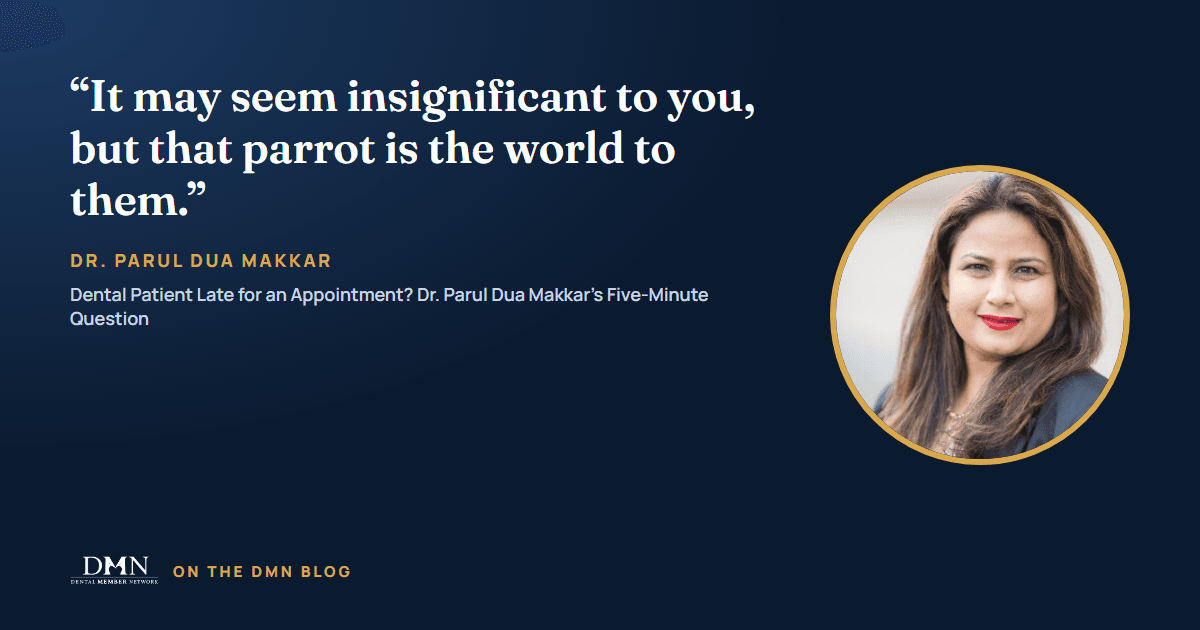
It may seem insignificant to you, but that parrot is the world to them.
That one sentence holds the idea behind her whole approach. What feels small to the dental team can be the biggest thing in the patient's day. When you stop to hear it, the patient notices.
For more on how one practice builds the first visit around the person, see Dr. Michael Sonick's approach to the new dental patient experience.
Is it worth the time when you are already behind?
Dr. Makkar is honest that it costs something. Talking to a late patient can throw the day off. Her view is that the trade is worth it:
And when you spend that five, 10 minutes extra with that patient. Yeah, it may disrupt your schedule a little bit, but it builds your practice in a different sort of way.
The way it builds the practice is through how patients talk about you afterwards. In her words, they come away thinking "the doctor actually didn't consider me a number" and, instead of hurrying in with a treatment plan, "actually sat and talked to me."
She does not put a number on this, and neither do we. Her point is about what patients remember.
Why do patients want this now more than ever?
Dr. Makkar sees a gap in how people connect today, especially younger patients. "There is such a disconnect because we are in a virtual world. We are yearning for human interaction."
A dental visit is one of the few times a patient is face to face with a professional who has to slow down and pay attention to them. She sums up what they are looking for in one line:
That's what patients want. They want to be seen, feel felt and acknowledged.
It is also why she leans towards a practice built on care. "We want to take care of our patients. We want to do the best for our patients."
Does the same idea apply to your team?
It does, and Dr. Makkar starts there. She talks about the team members who are juggling children and ageing parents alongside their work. When her assistant told her that her child was sick and asked to bring them in, her answer was: "sure, I have a room in the back and we can do this."
She is careful to say this is a balance. Being understanding does not mean letting people take advantage. But a team that is treated with care at work is far more likely to show the same care to a patient who walks in late and flustered.
She also believes the good you put out comes back. As she puts it, "what you give out is what you get back in return."
What about your late-patient policy?
Dr. Makkar does not talk about policies, fees or rebooking rules on the panel, and this article does not invent any for her. Her point is about the first minute with the patient, whatever your policy says.
If late arrivals are a regular strain on your front desk, our article on reducing dental front desk overload looks at the systems side. A good place to share her question with the team is your morning huddle.
Frequently asked questions
What should I say to a dental patient who is late for an appointment?
Dr. Parul Dua Makkar suggests starting with a simple, caring question: "hey, what brought you in late today?" Then listen to the answer before turning to the schedule.
Won't talking to late patients make the schedule worse?
It can, a little. Dr. Makkar accepts that. Her view is that five or ten extra minutes builds the practice, because the patient leaves feeling like a person rather than a number.
How do I make dental patients feel heard?
Ask about what matters to them and take it seriously, even when it seems small to you. As Dr. Makkar puts it, patients "want to be seen, feel felt and acknowledged."
Does this apply to the dental team as well?
Yes. Dr. Makkar extends the same understanding to her staff, for example when a team member's child is sick, while making sure the kindness is not taken advantage of.
About the expert
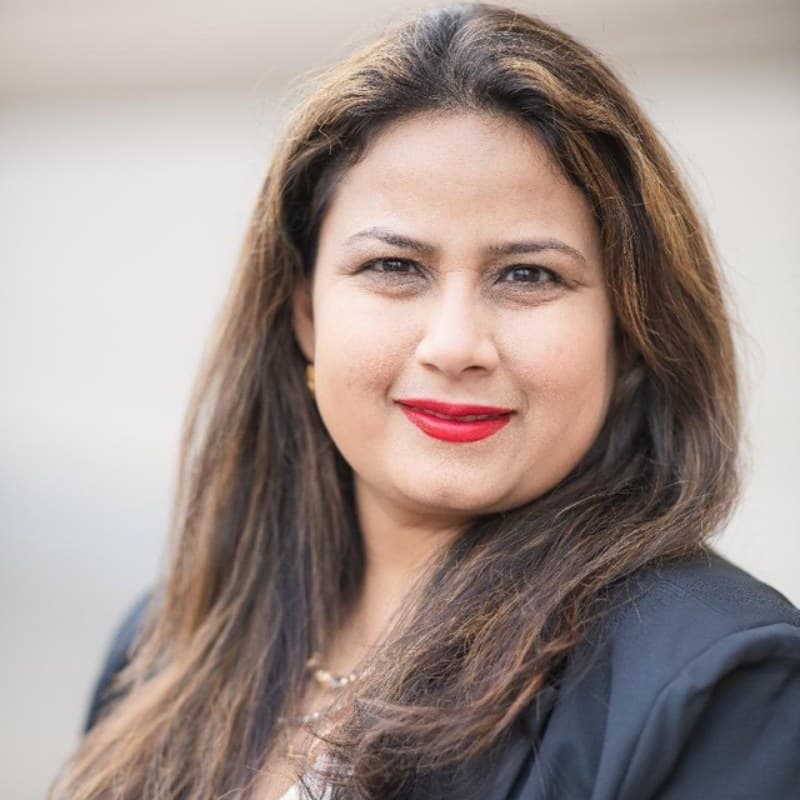
Dr. Parul Dua Makkar
Founder, Dua Good Job
Dr. Parul Dua Makkar is a practicing dentist in NY, and the founder of Dua Good Job™ (duagoodjob.com), an oral cancer education platform built on one core belief: early detection saves lives, and every patient deserves a provider who looks closely and listens fully. She also created Healing the Healers, a grief and resilience program for dentistry and healthcare.
The takeaway
Ask before you rush.
The next time a patient walks in late, take a breath and ask what brought them in late today. What seems small to you may be the world to them, and they will remember that you asked.
Patient Experience
Seen, Felt and Acknowledged
Dr. Parul Dua Makkar
Founder, Dua Good Job
Continue inside the membership
Seen, Felt and Acknowledged
Dr. Parul Dua Makkar's complete Practice Playbook inside the Dental Member Network, built from her own answers on a Thriving Dentist expert panel.
Get Dr. Parul Dua Makkar's complete Seen, Felt and Acknowledged Practice Playbook inside the Dental Member Network.
Join Dental Member Network